
What is Occupational Therapy (OT)?
Occupational Therapy (OT) helps children build the everyday skills they need to participate in life—at home, at school, and in the community. OT focuses on things like sensory regulation, fine and gross motor skills, self-care routines (dressing, feeding, toileting), play, feeding skills, and school-related tasks. The goal is simple: to help your child feel more comfortable in their body, more capable in their routines, and more confident in their world.
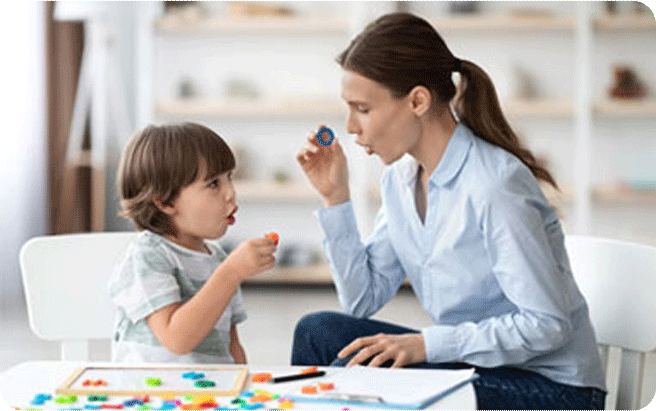
Our OT Approach at Hope Autism Services
- We begin by learning about your child’s strengths, challenges, and daily routines, as well as your priorities as a family.
- Our Occupational Therapists complete a thorough assessment and create an individualized, goal-focused plan that fits your child—not the other way around.
- We use play-based, sensory-informed, and trauma-informed approaches, always respecting your child’s pace, preferences, and comfort level.
- OT sessions may take place in our sensory-friendly spaces, using movement, play, and meaningful activities (including feeding when appropriate) to build skills in a fun, engaging way.
- We work closely with parents, caregivers, and our multidisciplinary team (ABA, SLP, and more) to support consistent strategies across home, school, and therapy.
How OT at Hope Can Help Your Child
- Regulate their senses and emotions: Learn strategies to manage sensitivities to noise, textures, movement, or touch—reducing overwhelm and helping your child feel calmer and more in control.
- Build fine and gross motor skills: Improve hand strength, coordination, balance, posture, and motor planning for activities like writing, cutting, climbing, or playing on the playground.
- Develop self-care and independence: Practice dressing, toileting, brushing teeth, washing hands, using utensils, and other daily living skills step-by-step, at a pace that feels manageable.
- Support feeding and mealtime participation: Address challenges such as picky eating, limited food variety, difficulty chewing or managing textures, and mealtime anxiety—using gradual, child-centred strategies to make eating safer, more comfortable, and less stressful for your child and family.
- Improve school-related skills: Work on printing, cutting, organizing materials, staying seated, and following routines so your child can participate more comfortably in the classroom.
- Increase attention and engagement: Support your child in staying focused, transitioning between activities, and participating more fully in play, learning, and family routines.
- Support positive behaviour through regulation: When a child’s sensory, motor, and feeding needs are better supported, challenging behaviours often decrease, and participation in meaningful activities increases.
- Empower parents and caregivers: Learn practical, easy-to-use strategies and environmental modifications you can use in everyday routines and mealtimes—so therapy continues between sessions and your whole family feels more supported.
Book Free Consultation
Timings
- Morning Sessions:
- 9:00 a.m. – 12:00 p.m.
- Afternoon Sessions:
- 1:00 p.m. – 4:00 p.m.
Frequently Asked Questions:
Compassionate, high-quality support for children with autism, delivered by experienced and dedicated professionals.
Included Services
- 1:1 therapy with a Behavior Clinician, supervised by a BCBA
- Ongoing clinical supervision and oversight by a Registered Behavior Analyst (RBA)
- Individualized assessment and Behavior Intervention Plan based on priority goals
- Consultation with a Speech-Language Pathologist (as needed)
- Consultation with an Occupational Therapist (as needed)
- Opportunities for social interaction and group activities
- Regular parent/caregiver updates, with the option to observe sessions
- Progress tracking via Hi-Rasmus software, with unlimited access for parents/caregivers (fee applies)
- Parent/caregiver coaching for continued support at home
Each therapy session is personalized to meet your child’s unique needs and is guided by the goals established in collaboration with your clinical team. Sessions may focus on a variety of skill areas, including but not limited to:
Communication skills (e.g., expressive and receptive language, social communication)
Daily living skills (e.g., dressing, hygiene, self-care)
Toileting (e.g., toilet training, increasing independence)
Feeding skills (e.g., expanding food variety, improving self-feeding)
Reducing challenging behaviors (e.g., self-injury, aggression, property destruction)
School readiness and learning skills (e.g., attending to tasks, following instructions, transitioning between activities)
And more!
Each session is structured to maximize learning and progress while keeping your child engaged in a supportive and positive environment.
To begin the registration process, you can:
Fill out our online form available at Hope Autism Services Contact Us or Call us directly at 905-890-4673. You can also email us at in**@********sm.ca
What happens after I submit the form?
Once your form has been submitted, you will be placed in a queue to receive a follow-up call from one of our staff members. During this call, we will discuss your child’s needs, answer any questions, and outline the next steps for creating an action plan.
Are spots guaranteed once I submit the form?
No, spaces are limited and are filled on a first-come, first-served basis. Your registration is not final until it has been reviewed and confirmed by our Senior Therapist.
If you have any further questions, feel free to reach out—we’re here to help!
Please pack a backpack for your child that includes:
Nut-free and shellfish-free snacks
A water bottle
A change of clothes
If your child needs any additional items, your clinical team will discuss them with you before the start date.
If your child requires medication during their session, please inform the intake team before completing your registration.